
How Bristol’s business leaders are creating space for strategic thinking

Despite decades of investment in technology, productivity growth in the UK remains stubbornly flat. The UK has experienced a persistent productivity puzzle since the 2008 financial crisis, with output per hour worked growing more slowly than in previous decades and lagging behind other advanced economies.
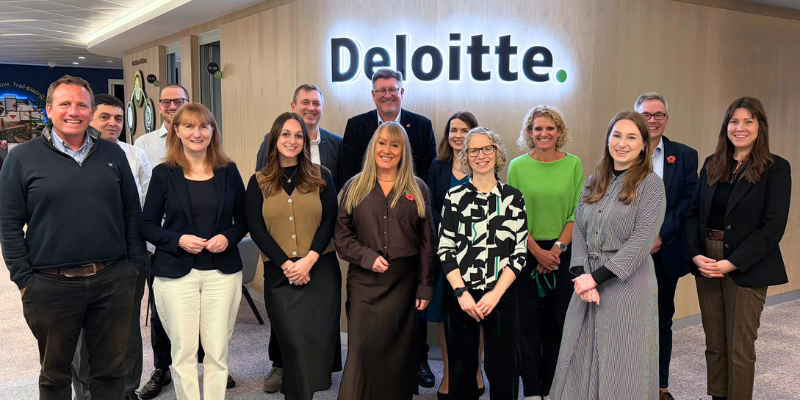
At a recent roundtable hosted by the Bristol Initiative and Deloitte, senior leaders explored whether boosting leadership capacity could be a swift and impactful step to drive productivity. Particularly as developments in technology, while offering promising solutions, can often take time to implement.
The conversation began with a striking reflection from our host at Deloitte, Dave Tansley - Practice Senior Partner for South West & Wales. Economist John Maynard Keynes’ predicted in the 1930s that technological progress would one day deliver a 15-hour working week. Almost a century later, when asked, there was unsurprisingly no one in the room working just 15 hours a week, and most agreed their jobs are harder than ever. While automation and AI have streamlined tasks, the demands on leaders have intensified.
The Leadership Squeeze
Participants painted a picture of leadership under pressure. Increased regulation, risk aversion, and layers of governance have slowed decision-making and eroded autonomy. Leaders often feel less trusted to act independently, spending more time on compliance than on strategy. This “sign-off culture” creates bottlenecks that stifle agility.
Technology can amplify the problem. Today’s business world is hyper-connected, leading to an expectation that leaders are “always on”, meaning they can become tethered to back-to-back Teams meetings, leaving little room for reflection or creativity.
Generational shifts add another layer of complexity. Today’s workforce values flexibility, purpose, and wellbeing, challenging traditional leadership styles and requiring an empathetic, adaptive approach. Leaders must balance commercial imperatives with cultural expectations.
Why Capacity Matters
The group reached a consensus that leadership capacity extends beyond merely increasing headcount; it involves redistributing decision-making power. A critical lever in this process is empowering and upskilling middle managers. When middle management is trusted and well-equipped, senior leaders are afforded the opportunity to concentrate on strategic initiatives rather than being bogged down by immediate crises.
Moreover, continuity at the top is essential. High turnover at senior levels, especially in the public sector, can disrupt long-term vision and create instability. Organisations that successfully navigated the challenges of the pandemic were highlighted as examples of resilience, which stemmed from their adaptability and trust.
Practical Steps Leaders Can Take
Several creative ideas surfaced during the session, offering inspiration for leaders across sectors:
- Build community: From team lunches with phones off to executives spending time on the front line, small gestures strengthen connection and trust.
- Invest in vertical development: Focus on how leaders think, not just technical skills. Frameworks like Flow Leadership, balancing people, purpose, and performance, were recommended for creating sustainable leadership growth.
- Make time for thinking: Some participants schedule short breaks between meetings to allow time to decompress. This has the dual effect of giving more space to think and strategise, but also to enter the next meeting with more clarity.
- Get outside: Some participants had seen great outcomes from walking meetings to spark informal conversations. Crucially, this meant time away from digital distractions and enabled real connection to help foster trust.
- Encourage reverse mentoring: Pairing leaders with younger colleagues helps challenge assumptions and broaden perspectives. This approach was described as “popular and powerful” among attendees.
- Set boundaries: Protecting time for strategic work is essential, even if it means saying no to non-essential meetings.
- Personalise leadership: Tools like “Manual of Me”, which encourages individuals to share how they work best, were highlighted as practical ways to improve collaboration and reduce friction.
The bigger picture
Leadership capacity isn’t just an organisational issue, it’s a regional economic imperative. Strong, confident leaders who create space for strategic thinking can drive productivity, resilience, and growth across Bristol and beyond. Collaboration and shared learning between businesses will strengthen the wider ecosystem, ensuring that the South West remains competitive in an increasingly complex world.
If you’re not a member but would like to find out more about the Bristol Initiative, then get in touch with our team to enquire about joining.