
Wellbeing as a competitive advantage – driving growth in an era of change

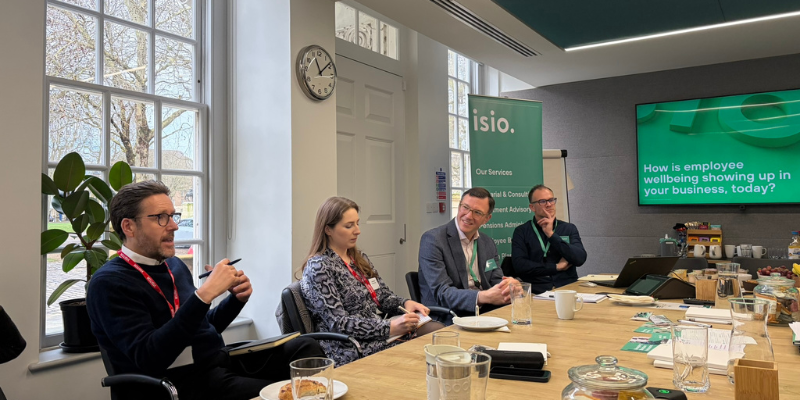
Senior HR leaders came together at a recent Bristol Initiative roundtable to consider a question that is becoming harder to ignore: what does wellbeing really mean for organisational performance?
Hosted and chaired by Isio, one of the UK’s leading modern advisory firms, the discussion brought together senior leaders from across professional services, defence, property and legal. As established experts in employee benefits, Isio convened sector specialists to explore how organisations are rethinking the role of wellbeing. What became clear throughout the conversation is that wellbeing is no longer viewed as a ‘nice to have’. It is now recognised as a core driver of organisational performance, resilience and long‑term value.
The cost of doing nothing
When wellbeing deteriorates, the impact is felt quickly. It shows up in absence, attrition and reduced productivity. It places pressure on managers and creates hidden costs across the business.
Data shared during Isio’s presentation underlined the scale of that impact:
- Employees are now taking an average of 9.4 days of unplanned absence per year (a 62% increase since pre-pandemic levels) at an estimated cost of £118.75 per day.
- Replacing talent can cost 0.5-2 x salary.
- 63% of employees report experiencing at least one burnout characteristic.
- Organisations with low wellbeing and high churn can underperform competitors by up to 2.5 times.
The question posed around the table was simple: where is wellbeing already costing your organisation money?
Framing the issue commercially, rather than purely culturally, is shifting the conversation at board level. Leaders are recognising that the cost of inaction is often embedded in day-to-day operations, rather than captured in a single budget line.
Moving beyond reactive support
Many organisations said their current wellbeing offer had evolved over time, particularly during the pandemic. Support was introduced at pace, and in some cases, those interventions remain in place but sit alongside one another without a clear overarching strategy.
There is also a risk that investment fails to result in real employee value. An estimated £15bn is wasted annually on employee benefits that go unused, highlighting the importance of aligning support more closely to workforce needs and improving personalisation to drive engagement and return on investment.
Measuring the impact of this investment remains a challenge, yet there was agreement that better use of data is part of the answer. Tracking absence trends, analysing attrition and understanding which workforce groups feel least supported can provide a more focused starting point. The challenge is not whether to invest, but how to align support with long-term priorities.
Culture, consistency and capability
For organisations operating across multiple sites or functions, consistency of experience is a real issue. Culture may feel strong at head office, but in the wider organisation it can depend heavily on individual line managers. Building trust in feedback mechanisms, such as anonymised employee feedback surveys and creating open channels to senior leadership, were highlighted as practical steps.
Line managers were repeatedly identified as central to this agenda, because often they can rise to their roles through technical expertise, rather than people-management experience. Equipping them with the confidence and language to have early, constructive conversations with their staff can make a significant difference.
Changing expectations
Demographic change is also influencing the debate. Younger employees often expect flexibility and a broader definition of reward. At the same time, some organisations are seeing renewed appetite for in-person connection and shared learning.
Support needs also vary across sectors and career stages. For those transitioning from highly structured environments, for example, from the military into more commercial roles, belonging can require more deliberate attention. In other settings, traditionally male or operational workforces may be less likely to engage with HR until issues reach crisis point.
Taking a strategic pause
As the discussion closed, several leaders reflected on the importance of stepping back to ask:
- Does the current wellbeing offer reflect the workforce of today?
- Does it support where the organisation is heading next?
There was recognition that while external pressures will always exist, businesses have more control than they sometimes assume. Clearer data, stronger alignment and visible leadership intent through a clear strategy can shift wellbeing from a collection of initiatives to an employee base that feels supported and valued.
For Bristol’s business community, this feels like a timely moment. Rob Watkin, Isio Partner and Bristol Market Lead, comments:
"It's clear that wellbeing has evolved from a ‘nice to have’ into a fundamental driver of business performance. Understanding where wellbeing support is genuinely making a difference allows leaders to take more targeted action and deliver stronger outcomes for people and the organisation alike.”
If you’re not a member but would like to find out more about the Bristol Initiative, then get in touch with Jenny Ablett, Bristol Initiative Acting Director.