
Zero Point Motion strengthens foundations for a new era of motion sensing
Bristol-based Zero Point Motion is pioneering a new class of photonics based inertial sensors that deliver up to 100x better performance than today’s mainstream devices.

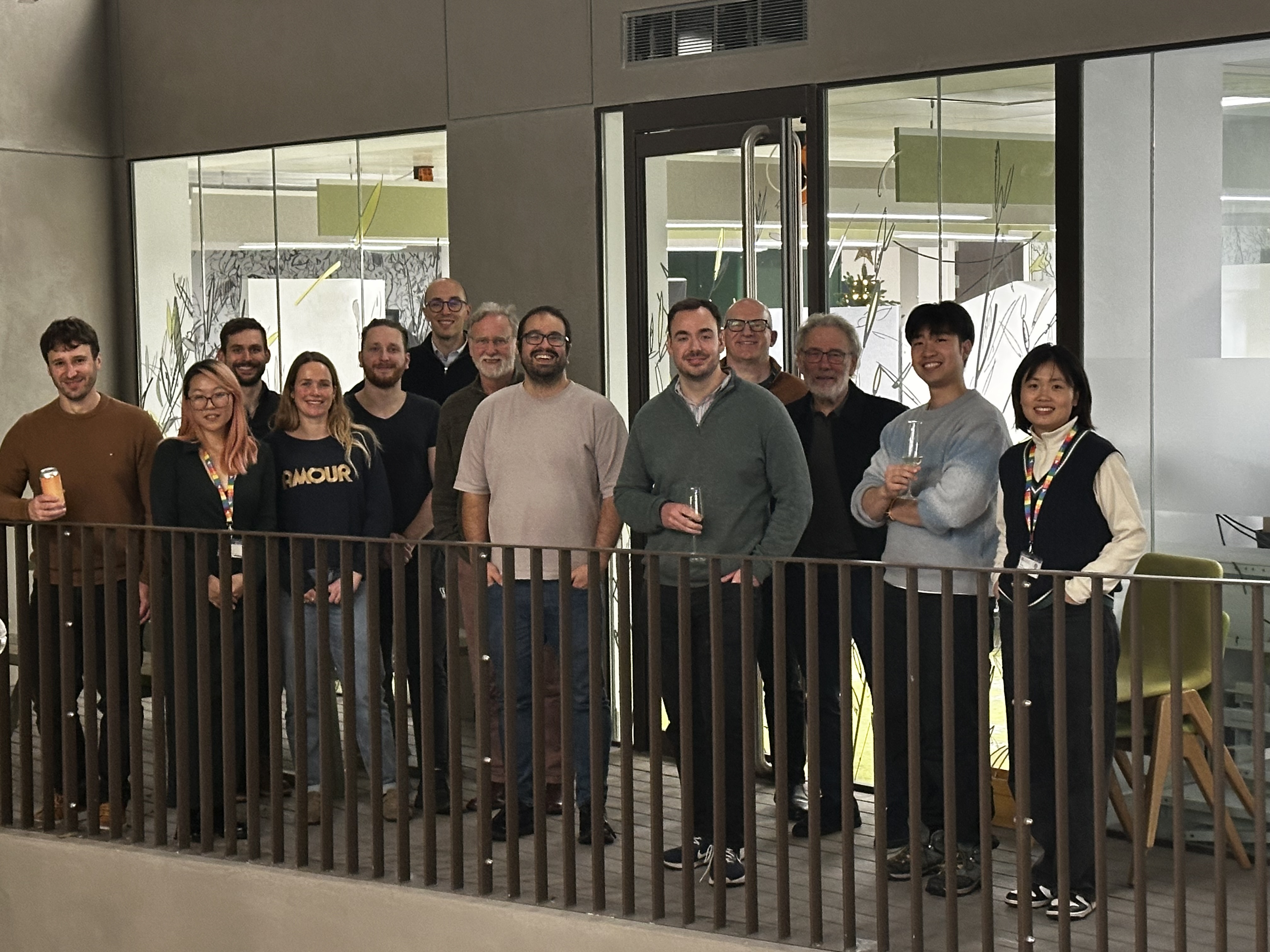
Zero Point Motion's technology is built to unlock reliable navigation for robots, machinery, wearables and future XR systems.
“Anything that moves will want to know how it's moving,” says CEO, Lia Li. “What excites me is that we are solving motion from both ends. We can give machines and vehicles better information so they can move more safely and intelligently, while also unlocking new insight into human movement itself.
Better motion sensing is not just about navigation. It is about understanding how the physical world moves” . That vision sits inside a global inertial sensing market worth $16bn USD, but Lia believes the long-term opportunity is larger: motion intelligence for machines, vehicles and physical AI systems.
The company has grown quickly since its inception in 2020, moving from university cleanrooms into full commercial pre production, as it works to industrialise a fundamentally new way of building inertial sensors. Alongside its technical progress, Zero Point Motion has been building strong links with the Bristol innovation ecosystem, nurturing local talent through internships, university collaborations and early-career engineering pathways.
The company has hosted eight interns from local Bristol universities across part-time, full-time summer and term-time placements. That experience has helped shape its Launchpad scheme, created to support recent graduates and engineers from adjacent industries as they transition into full-time roles in deep-tech hardware.
Crucially, Zero Point Motion has been backed from an early stage by u blox, a Swiss navigation specialist, starting with a £2.58m seed round. The company is one of the world's highest revenue companies in positioning technology, giving the startup both deep market insight and immediate global reach.
“It’s crucial to have investors that understand how the technology will impact the market,” Lia explains. That distinction sits at the heart of Zero Point Motion’s vision. As physical AI moves into warehouses, construction sites, factories, farms and eventually consumer devices, machines will need richer motion intelligence to operate safely and reliably.
Yet rapid technical progress brought equally rapid organisational challenges: the complexity of migrating academic IP into a commercial company, the need to build a scalable team culture, and the difficulty of forming meaningful collaborations with universities and industry. This is where Innovate UK Business Growth, delivered by Business West in the South West, became essential.
Women in Innovation: community, confidence and crucial early funding
One of the most significant turning points for the business came when Lia received the Women in Innovation Award. The funding was one of the first injections of cash into Zero Point Motion and prepared the ground for seed investment, but equally important was the new sense of belonging.
Moving from London back to her hometown, Bristol, meant Lia was starting a company away from familiar networks. Suddenly being part of a cohort of around 40 women founders gave her a circle of people who understood the realities of building a business, from hiring challenges to taxes to the emotional demands of early entrepreneurship.
As she explains:
“That community was the most beneficial part – we talked openly about all the things that feel alien when you start running your own company.”
The award also kick-started Lia’s work with Innovation and Growth Specialist, Natalie Collard, who helped develop a detailed growth plan focused on IP and team development.
IP Audit: establishing clarity, credibility and investor alignment
Natalie first helped Lia to apply for an IP Audit. The process helped Zero Point Motion navigate the complicated overlap between Lia’s academic research and the company’s emerging IP. It clarified ownership, identified what needed strengthening, and created a structure the company could build on as it grew.
The IP Audit also helped Lia refine what a strong patent strategy should look like for an early-stage fabless semiconductor company. Earlier in her career at BAE Systems, she had already been named on a patent, but that experience came from within a large organisation with the resources to protect a wide range of inventions.
Zero Point Motion began protecting not only its device concepts, but also the process, integration and manufacturing know-how that strengthens its position with foundries and supports long-term scale.
Lia reflects:
“I’m proud of our patent strategy. We don’t over-patent. Our patents are meaningful because they protect the architecture we are building, not just isolated inventions. The IP Audit gave us the structure to think about that properly from the start.
Team coaching: resolving culture clashes and building a fast, flexible way of working
As Zero Point Motion grew, Lia and Natalie recognised that the company needed a new way of working, one that could harness the full range of skills and perspectives within the expanding team. Building the technology required the team to work across MEMS, silicon photonics, electronics, packaging, software and real-world system testing, bringing together disciplines that are often separated in larger organisations.
Team members from academic backgrounds tended to favour perfect, carefully refined solutions, while those from larger corporate environments were often more used to established processes, structured coordination and clearer division of responsibilities. Others pushed to move fast, iterate and make decisions quickly.
This difference in working styles created friction at times, but it also revealed the opportunity to build a culture that balanced rigour with agility.
Natalie introduced a team-building coach who helped the company leverage the different strengths in the team. The result was a working style that blended academic depth with the fast, iterative mindset required to deliver breakthrough hardware at speed.
As Lia puts it:
“People naturally bring habits from academia or larger companies, so we’re working to create a culture that keeps the strengths of those backgrounds while adapting them to the pace, ownership and learning cycles of an early-stage startup. That has shaped how we hire. We are interested in unusual talent: people who may not have followed a conventional path, but who are curious, hands-on and able to learn quickly across disciplines”
This shift even influenced hiring. Lia began bringing in more interns through university links: fresh minds who often asked fundamental questions that challenged assumptions, and unlocked surprisingly effective solutions.
Innovate UK grants: expanding networks, talent and visibility
Aside from the Women in Innovation Award, Zero Point Motion has seen significant success in Innovate UK grant competitions, which have unlocked a host of new opportunities. These include:
- MyWorld initiative (immersive sensing research with UWE) that developed ZPM’s own virtual reality mini-game to understand how digital content changes human responses
- CCAV automotive grant (giving access to ASIN and major OEMs), and leading to successful track testing in the high performance motorsport sector
- University of Bath simulation project (improving fabrication yield)
These grants enabled Zero Point Motion to work with universities despite being VC-funded, something that is normally challenging due to IP agreements. They also created direct pathways to hiring: two UWE interns joined the company through grant collaborations, with one now joining full time.
The impact of Innovate UK Business Growth
Together, the Women in Innovation community, the IP audit, coaching and ongoing specialist support have given Zero Point Motion the structural, cultural and strategic foundations needed to scale a company with unusually ambitious technical goals. The company has since raised a further £4M in investment at the start of 2025.
For Lia, that matters because the opportunity is larger than a single product. Zero Point Motion is working to build a new sensing architecture for the physical AI era: one where machines do not just process information, but understand their own movement through the world.
As Lia summarises:
“Innovate UK has been consistent, supportive and genuinely transformative. Funding is important, but for a company like ours the bigger value is the ecosystem around it. We are building technology for a future where machines need to move with far greater trust, precision and autonomy. That needs better motion intelligence, and we believe the UK can play a serious role in shaping it”.